Professor
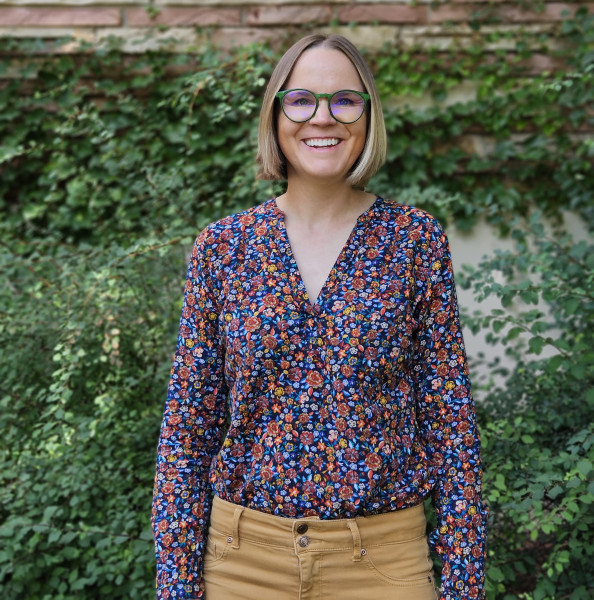
About
Find Me On:
linkedinWebsite
http://www.researchgate.net/profile/Katie_Abrams/Role
FacultyPosition
- Professor
Concentration
- strategic communication, behavior change, science communication, media effects
Department
- Journalism & Media Communication
Education
- PhD
Curriculum Vitae:
Biography
Strategic communications expert with 10+ years leading communication-based behavior change initiatives at the intersection of environmental, public health, and food systems. Her research bridges academic theory and real-world application to translate behavioral science into communication strategies that produce measurable results.
She has led projects with the National Park Service, National Oceanic and Atmospheric Administration, and Florida Fish and Wildlife Conservation Commission to promote wildlife-friendly behavior across Florida, Hawaii, and 10 U.S. national parks. Their latest campaign is Boaters for Turtles, unites vessel strike prevention efforts across Florida and encourages boaters to slow down in sea turtle protection zones. EPA- and CSU-funded work extends this expertise to public health, developing strategies to protect outdoor workers and manufactured home residents during wildfire smoke events. Additional collaborations with graduate students and interdisciplinary teams address One Health challenges in environmental and agricultural communication.
Her award-winning research has appeared in leading academic journals and national outlets including NPR and USA Today. She is currently President of the Conservation Marketing Working Group with the Society for Conservation Biology.
Visit her research lab website
Watch a short video highlighting some of her work in Hawaii
More broadly, she advises students with interests in media effects, public relations, advertising, and institutional communication, as well as those with interests specific to communication regarding conservation, food, agriculture, or health. She uses survey, experimental, in-depth interview, focus group, and observation methods in her research.
Prior to joining the department in August 2013, she was a faculty member in advertising and agricultural communication at the University of Illinois Champaign-Urbana. Her interests in conservation, agriculture, and health come from her degrees in agricultural communication from Purdue University (B.S.) and the University of Florida (M.S., Ph. D.). Her professional experience is in web and graphic design and audience and messaging research.
Publications
Anderson, A. A., Abrams, K., Bice, C., Ford, B., Guajardo, M., Magzamen, S., McGuire, B., Pierce, J., & Fischer, E. V. (2026). Tailoring air quality communication for outdoor workers: Effects on information seeking. Social Marketing Quarterly, 32(2), 206-226. https://doi.org/10.1177/15245004261424898
Abrams, K. M., Dietsch, A., & Bice, C. (2025). Shaping camper behavior to protect wildlife: Effects of a social marketing approach in national parks. Environmental Communication. https://doi.org/10.1080/17524032.2025.2483280
Foerster, T. A., Chalgren, L., Abrams, K., Bice, C., & Singer, M. (2025). Informing or influencing? A content analysis of wildlife feeding deterrence messages in U.S. national park communications. Journal of Interpretation Research, 30(2), 183-203. https://doi.org/10.1177/10925872251388948
Bice, C., Anderson, A. A., Abrams, K. M., Ford, B., Magzamen, S., Pierce, J. R., & Fischer, E. V. (2025). Air Aware: A theory-driven, co-designed air quality communication campaign to promote health protective behaviors among outdoor workers. Journal of Applied Communication Research. https://doi.org/10.1080/00909882.2025.2564074
Scott, D., Anderson, A. A., Abrams, K. M., Long, M., Ford, B., Magzamen, S., & Duncan, C. G. (2025). Dog owners are concerned about ambient air quality and require veterinary guidance. Journal of the American Veterinary Medical Association. https://doi.org/10.2460/javma.25.02.0124
Abrams, K., Molder, A., Nankey, P., & Leong, K. (2023). Encouraging respectful wildlife viewing among tourists: Roles for social marketing, regulatory information, symbolic barriers, and enforcement. Social Marketing Quarterly, 29(1). https://doi.org/10.1177/15245004231153085
Abrams, K. M., Leong, K., Melena, S., & Teel, T. (2020). Encouraging safe wildlife viewing in national parks: Effects of a communication campaign on visitors’ behavior. Environmental Communication, 14(2), 255-270. https://doi.org/10.1080/17524032.2019.1649291
Courses
-
JTC 792 Conservation Marketing
SyllabusStudy an emerging field of research and practice with roots in the well-established social marketing framework. This course will cover the social marketing framework in-depth as it applies to helping people to engage in conservation behavior with a special focus on the role of strategic communication. Course will include practical and academic applications of conservation marketing. Students benefit from having a strong foundation in quantitative research methods before taking this class.
-
JTC 419 Food and Natural Resources Issue Comm
SyllabusExamines how people consume and process information and communication about food and natural resources issues.
-
JTC 664 Quantitative Research Methods
SyllabusDives into core concepts and details of executing quantitative methods research to address communication and media research questions.
-
JTC 350
SyllabusTheory and practice of public relations, how public relations operates in organizations, its impact on publics and its functions in society. Covers the professional development of the field; concepts, issues, and principles in the practice; and models and theories guiding the practice.